Apple Grading Machine Installation Process: A Step-by-Step Guide
Installing an apple grading machine involves more than positioning equipment inside a packing shed. The feeding arrangement, machine alignment, utility connections and collection points must work together to support consistent grading and smooth fruit handling.
A well-planned Apple Grading Machine Installation Process helps growers and packing centres prepare their facility, coordinate installation work and begin production with trained operators.
This guide explains the main installation stages. Exact requirements should follow the manufacturer’s drawings and instructions for the supplied model.
1. Confirm the Machine Configuration and Layout
Before delivery, review the equipment included in your order. A standalone size grader has different installation requirements from a complete washing, drying and optical grading line.
Depending on the selected configuration, the installation may include:
- Loading or feeding conveyors.
- Washing and brushing sections.
- Drying equipment.
- Mechanical size or electronic weight grading.
- Optical inspection equipment.
- Collection bins and packing conveyors.
- Electrical controls.
Confirm the sequence of these sections and approve a layout showing their positions. Include space for workers, fruit crates, finished boxes and maintenance access.
2. Prepare the Installation Site
For Apple Grading Machine Installation Process, The installation area should be ready before the machinery arrives. A clear, accessible site helps avoid delays during unloading and assembly.
Check that the floor can support the equipment and operating loads specified by the manufacturer. It should also allow the machine to be levelled correctly.
Site preparation should cover:
- Clearing the proposed installation area.
- Confirming doorways and access routes.
- Providing adequate lighting and ventilation.
- Arranging drainage where washing is included.
- Keeping packing materials away from wet processing areas.
- Leaving access around controls and service points.
Ask the supplier whether the machine requires anchoring, a foundation or any special floor preparation.
3. Arrange Utilities Before Delivery
Utility requirements vary between machine models. Obtain a written utility schedule rather than assuming that every grading line needs the same connections.
| Utility | What to confirm |
|---|---|
| Electricity | Voltage, phase, connected load and protection requirements |
| Water | Supply requirements for washing sections, where included |
| Drainage | Suitable discharge arrangements for wet processing |
| Compressed air | Whether any actuators or other components require it |
| Network connection | Whether remote support or connected functions need access |
Electrical connections and protective earthing should be completed by qualified personnel according to the equipment documentation.
4. Plan Unloading and Inspect the Delivery
Agree on unloading arrangements before dispatch. Confirm who will provide lifting equipment and whether the delivery vehicle can reach the unloading point.
Use lifting equipment suited to the supplied sections and follow the manufacturer’s designated lifting points. Keep the unloading route clear.
After delivery, compare the received items against the packing list. Check for visible transport damage, missing accessories and damaged cables or connectors. Record any concerns before assembly begins.
5. Position, Assemble and Level the Machine
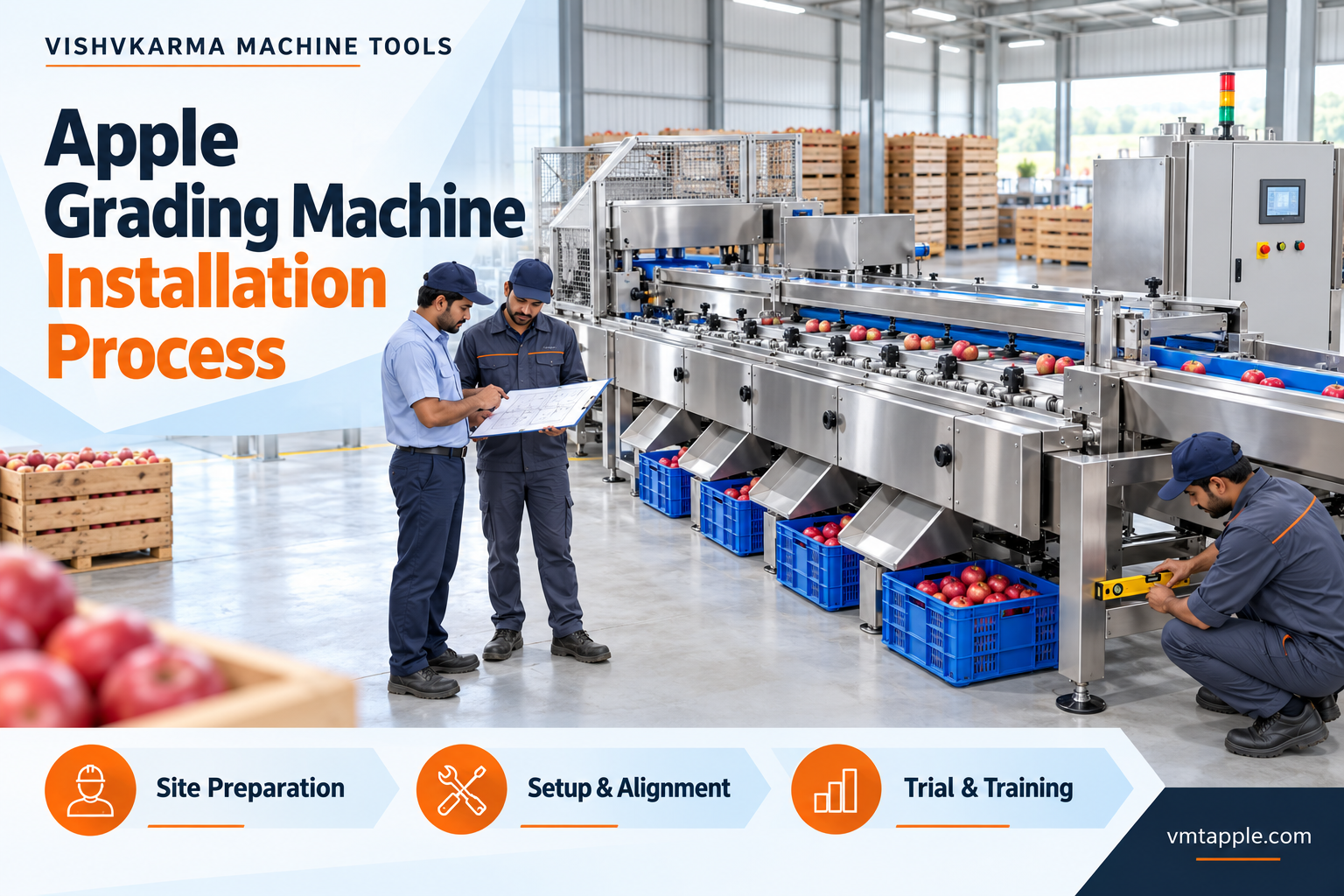
The installation team positions each section according to the approved layout. Depending on the delivery arrangement, some components may arrive assembled while others require on-site connection.
Levelling and alignment help produce move smoothly between sections. Poor alignment can contribute to uneven loading, fruit accumulation and difficult transfers.
During assembly, technicians check:
- Frame stability and equipment level.
- Conveyor and transfer alignment.
- Connections between adjoining sections.
- Collection bin positions.
- Access for cleaning and maintenance.
- Fasteners, covers and guards.
Mechanical adjustments should be made with the equipment stopped and isolated from its energy sources.
6. Complete Connections and Pre-Start Checks
Once assembly is complete, technicians connect the controls, motors, sensors and other supplied components according to the wiring and installation documentation.
Before starting the machine, the team should verify that guards are fitted, tools and packaging have been removed, and operating areas are clear.
Pre-start checks also include confirming the operation of emergency stops and any fitted safety interlocks. Relevant water and air connections should be checked before the corresponding sections are operated.
7. Run the Machine Without Fruit
An initial no-load trial allows technicians to observe the equipment before introducing apples.
During this stage, they check movement, conveyor tracking, operating direction and coordination between sections. Unusual noise, vibration, rubbing or leakage should be investigated before proceeding.
Where the line includes washing, drying or pneumatic equipment, these functions are checked using the manufacturer’s commissioning procedure.
8. Set and Verify the Grading Parameters
Calibration and setup depend on the grading technology installed.
Mechanical Size Grading
Technicians adjust the grading mechanism to the required size categories and verify the results using representative apples.
Weight Grading
Where electronic weighing is included, the weighing system is set up and checked using the manufacturer’s specified procedure and suitable reference weights.
Optical Grading
For optical systems, commissioning may include checking camera views, lighting, fruit presentation and grading settings.
Confirm which characteristics the installed system can assess. Visible-defect inspection capabilities depend on the supplied equipment and software.
9. Conduct a Trial with Representative Apples
A fruit trial is a key part of the Apple Grading Machine Installation Process. Use apples that represent the sizes, varieties and condition normally handled at your facility.
Begin at the manufacturer’s recommended commissioning rate and increase feeding as appropriate. Watch the complete workflow, including collection and packing.
Assess:
- Consistency of the collected grades.
- Fruit movement at transfer points.
- Bruising or other handling damage.
- Feeding stability and congestion.
- Coordination with the packing team.
- Practical throughput under the trial conditions.
Manually inspect samples from each grade. Record the trial conditions and resolve any issues before routine production begins.
10. Train Operators and Complete the Handover
Operators should understand how to start, run and stop the supplied machine correctly. Training should also cover permitted adjustments, cleaning and routine inspections.
The handover should include guidance on:
- Feeding apples at a suitable rate.
- Selecting and checking grade settings.
- Responding to alarms.
- Using emergency stops.
- Isolating equipment before cleaning or clearing blockages.
- Following the maintenance schedule.
- Contacting technical support.
Retain the operating manual, relevant drawings, warranty terms and commissioning record. These documents help operators maintain the setup established during installation.
Common Installation Problems to Avoid
Several avoidable issues can delay commissioning or affect performance:
- Preparing the electrical supply without checking the machine requirements.
- Leaving insufficient room for packing and maintenance.
- Changing the agreed layout without reviewing transfer points.
- Starting production before completing trial checks.
- Feeding fruit faster than the collection team can handle.
- Allowing untrained staff to change calibration settings.
Good coordination between the buyer, installer and operating team helps address these issues early.
Plan Your Apple Grading Machine Installation Process with Vishvkarma Machine Tools
For your Apple Grading Machine Installation Process, share the available floor dimensions, access details, power supply and required daily capacity with Vishvkarma Machine Tools. Confirm the equipment layout, site responsibilities and commissioning scope before delivery.
Visit vmtapple.com to discuss your apple grading requirements and request an installation plan for your selected configuration.
Frequently Asked Questions about Apple Grading Machine Installation Process
How long does apple grading machine installation take?
The duration depends on the equipment configuration, assembly requirements and site readiness. Confirm the schedule with the supplier after the layout and utilities are agreed.
Does every apple grading machine need a water connection?
No. Water is generally required when washing or another water-based processing section is included. A standalone dry grading machine may not need it.
Can the machine be used immediately after assembly?
Production should begin after the required connections, pre-start checks, calibration, fruit trials and operator training have been completed.
What should be ready before the installation team arrives?
Prepare the agreed floor area, unloading access, utilities, collection crates and representative apples for trial runs. Ensure the operators who need training are available.