How to Reduce Fruit Damage During Sorting: A Complete Guide
Fruit sorting is an important part of the agricultural supply chain. Whether it is apples, pears, citrus fruits, or other fresh produce, proper sorting helps businesses maintain quality, improve packaging, and deliver better products to customers.
However, fruit damage during sorting is a common challenge. Bruising, cuts, pressure marks, and surface scratches can reduce the commercial value of fruits. Even minor damage may become more noticeable during transportation or storage, leading to wastage and financial losses.
Traditional sorting methods often involve considerable manual handling. Although manual sorting can be useful, repeated handling, unsuitable equipment, and improper operating practices may increase the risk of damage.
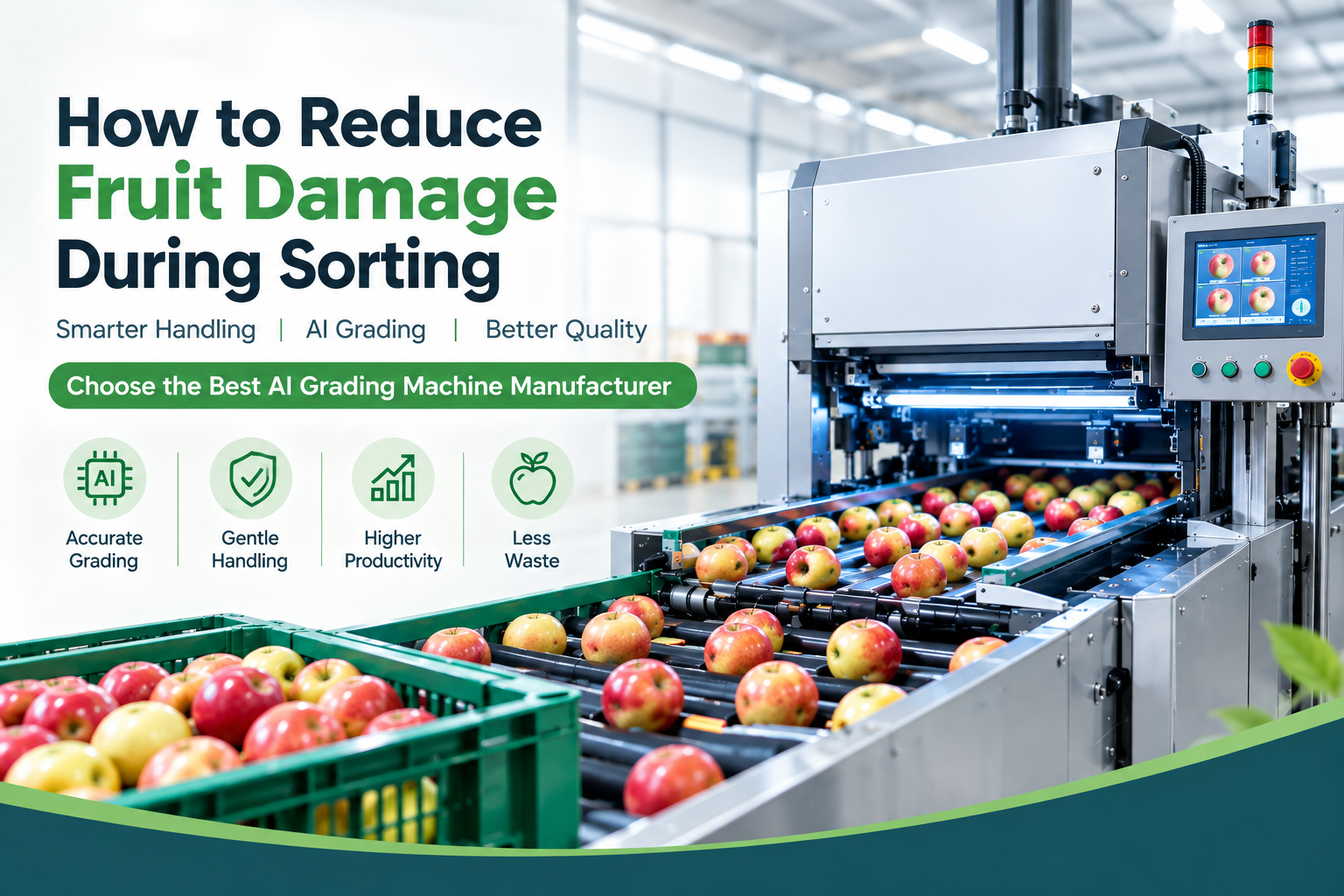
Modern fruit grading technology offers a more efficient approach. AI-powered grading machines can inspect fruits according to specific quality parameters and support automated sorting. When combined with gentle handling systems, these machines can help businesses improve productivity while protecting fruit quality.
For agricultural businesses looking to upgrade their operations, choosing the best AI grading machine manufacturer is an important decision. The right manufacturer can help businesses identify suitable grading technology based on fruit type, production capacity, and handling requirements.
This blog explains the causes of fruit damage during sorting and practical ways to reduce it.
What Is Fruit Sorting and Grading?
Fruit sorting and grading are related but distinct processes.
Sorting generally involves separating fruits according to characteristics such as:
- Quality
- Size
- Color
- Shape
- Visible defects
- Ripeness
- Weight
Grading involves classifying fruits into specific categories according to defined quality standards.
For example, apples may be divided into different grades based on size, appearance, color, and visible surface defects.
In modern processing facilities, sorting and grading machines can combine mechanical handling, cameras, sensors, and software to inspect and classify fruits.
The objective is to achieve consistent quality assessment while maintaining an efficient production line.
However, the sorting process must be designed carefully. If fruits are handled roughly during feeding, inspection, or collection, even accurate grading may result in unnecessary product damage.
Common Causes of Fruit Damage During Sorting
Understanding the causes of fruit damage is the first step toward improving sorting operations. Several factors can affect fruit quality during mechanical or manual sorting.
1. Excessive Manual Handling
In traditional sorting systems, workers may repeatedly pick up, inspect, and move fruits. Frequent handling can increase the risk of bruising, especially when fruits are delicate or already damaged.
Unnecessary handling should be minimized wherever possible.
2. Rough Conveyor Surfaces
Conveyor belts, rollers, and other machine components come into direct or indirect contact with fruits. If these surfaces are unsuitable, damaged, or poorly maintained, they may cause scratches, pressure marks, or bruising.
3. Sudden Drops Between Conveyors
Fruits may be transferred from one conveyor to another during the sorting process. Excessive gaps or poorly designed transfer points can cause fruits to fall onto hard surfaces.
These impacts may damage the fruit even when no visible injury appears immediately.
4. Incorrect Conveyor Speed
Conveyor speed affects how fruits move through the sorting line. Excessive speed can lead to collisions, unstable movement, and sudden impacts.
The appropriate speed depends on the fruit variety, machine design, and operating conditions.
5. Overcrowding on the Sorting Line
When too many fruits enter the system at once, they may collide or become congested. Overcrowding can also affect grading accuracy because cameras and sensors may not be able to inspect individual fruits properly.
6. Improper Collection Methods
Damage can occur even after fruits have been successfully graded. Dropping fruits into hard containers or allowing collection bins to become overfilled may cause bruising and pressure damage.
The collection stage should receive the same attention as the sorting stage.
8 Effective Ways to Reduce Fruit Damage During Sorting
1. Choose a Fruit Grading Machine With Gentle Handling
One of the most important ways to reduce fruit damage is to select equipment designed for careful fruit movement.
A modern fruit grading machine should aim to minimize unnecessary impacts during:
- Fruit feeding
- Conveyor movement
- Inspection
- Grading
- Transfer between sections
- Final collection
Depending on the fruit and machine design, suitable handling features may include soft-contact surfaces, carefully designed transfer mechanisms, and controlled fruit movement.
When choosing a machine, businesses should examine the complete handling process rather than focusing only on grading speed or automation.
A reliable fruit grading machine should combine accurate inspection with suitable fruit-handling technology.
2. Maintain a Controlled Fruit Feeding System
The feeding stage is where fruits enter the sorting line. Poor feeding practices can create congestion, collisions, and uneven fruit movement.
A controlled feeding system helps maintain a steady flow of produce through the machine.
To improve fruit feeding:
- Avoid overloading the machine.
- Maintain consistent fruit spacing.
- Remove unsuitable materials before feeding.
- Follow the recommended feeding capacity.
- Ensure fruits enter the system smoothly.
A properly designed feeding system can improve both grading performance and fruit-handling efficiency.
For businesses processing large quantities of apples or other produce, an automated feeding system may help reduce repetitive manual handling.
3. Maintain Proper Fruit Spacing
Fruit spacing is essential for both quality inspection and gentle handling.
When fruits are too close together, they may collide or block one another. Overcrowding can also make it difficult for cameras and sensors to inspect individual fruits.
Proper spacing helps:
- Reduce fruit-to-fruit contact.
- Improve camera visibility.
- Support accurate grading.
- Prevent congestion.
- Maintain smooth product flow.
The ideal spacing depends on the fruit size, machine configuration, and sorting technology.
Operators should follow the manufacturer’s recommendations to maintain efficient and controlled fruit movement.
4. Use Suitable Conveyor Speeds
Conveyor speed should be adjusted according to the type of fruit and the machine’s operating requirements.
If the conveyor moves too quickly, fruits may experience sudden acceleration, collisions, or unstable movement. If it moves too slowly, production efficiency may be affected.
A suitable operating speed can help balance:
- Fruit safety
- Sorting accuracy
- Production capacity
- Machine performance
- Operator control
Different fruits have different handling requirements. For example, apples may tolerate handling conditions that are unsuitable for softer fruits.
Therefore, businesses should select machines that offer suitable operating adjustments and follow the manufacturer’s recommended settings.
5. Minimize Drop Heights and Rough Transfers
Transfer points are important areas where fruit damage may occur.
During sorting, fruits may move between conveyors, inspection units, grading sections, and collection systems. If these transfers involve excessive drops or hard surfaces, the risk of bruising may increase.
To reduce transfer-related damage:
- Minimize unnecessary gaps.
- Use suitable transfer mechanisms.
- Avoid sharp edges.
- Inspect conveyor alignment.
- Keep contact surfaces in good condition.
- Ensure fruits move smoothly between sections.
A well-designed fruit sorting system should consider fruit movement from the moment it enters the machine until it reaches the collection area.
6. Use AI-Based Fruit Grading Technology
Artificial intelligence is transforming the way fruits are inspected and graded.
AI fruit grading machines can use cameras, imaging systems, sensors, and software to analyze fruit characteristics. Depending on the machine, these characteristics may include:
- Size
- Color
- Shape
- Surface appearance
- Visible defects
- Weight
- Quality categories
Automated inspection can reduce dependence on repeated manual examination and help businesses maintain more consistent grading standards.
For example, an AI grading system may identify fruits with visible surface defects and direct them toward appropriate quality categories.
However, AI grading does not automatically eliminate physical damage. The machine’s feeding system, conveyors, transfer mechanisms, and collection process also influence fruit safety.
This is why selecting the best AI grading machine manufacturer involves evaluating both intelligent inspection technology and mechanical handling design.
7. Use Appropriate Fruit Collection Systems
The final collection stage is an important part of the sorting process.
After fruits are graded, they must be directed into suitable trays, bins, or packaging containers. If this process involves excessive dropping or pressure, fruits may become damaged.
To improve collection practices:
- Use suitable collection containers.
- Avoid excessive drop heights.
- Prevent overfilling of bins.
- Ensure smooth fruit discharge.
- Use collection methods appropriate for the fruit variety.
- Inspect containers for sharp edges or damaged surfaces.
For delicate fruits, collection systems should be selected carefully to reduce unnecessary impact.
Proper collection helps preserve the quality achieved during the earlier stages of sorting.
8. Maintain and Inspect the Sorting Machine Regularly
Regular maintenance helps keep fruit grading equipment operating efficiently.
Damaged belts, worn rollers, loose components, and misaligned parts can affect fruit movement and increase the risk of damage.
A useful maintenance routine may include:
- Inspecting conveyor belts.
- Checking rollers and moving components.
- Examining transfer points.
- Cleaning contact surfaces.
- Checking machine alignment.
- Reviewing conveyor speed settings.
- Inspecting collection areas.
- Testing sensors and grading systems.
Operators should also monitor the machine during production. Unusual noise, unstable fruit movement, or repeated blockages may indicate a problem that requires attention.
Regular maintenance can help prevent avoidable operational issues and support consistent sorting performance.
How AI Grading Machines Help Improve Fruit Sorting
AI grading machines combine automated inspection with mechanical fruit-handling systems. They are increasingly being explored by farmers, fruit packers, exporters, and agricultural processing businesses.
Here are some important benefits of AI-based grading technology.
Improved Quality Inspection
AI-powered imaging systems can evaluate visible fruit characteristics according to programmed grading criteria.
This can help businesses identify fruits with different quality characteristics more consistently.
Reduced Manual Inspection
Automated inspection can reduce the need for workers to repeatedly examine and move individual fruits.
This may help streamline operations and reduce unnecessary handling.
Consistent Grading Standards
Manual grading can sometimes vary between operators. Automated systems can support more consistent grading when properly calibrated and maintained.
Improved Processing Efficiency
AI grading machines can automate important parts of the sorting process, helping businesses manage larger quantities of fruit according to machine capacity.
Better Product Classification
Automated grading can help separate fruits into different categories based on defined quality requirements.
This may support more organized packing and distribution.
Potential Reduction in Handling-Related Damage
When automated grading is combined with suitable fruit-handling equipment, businesses may reduce unnecessary transfers and manual movement.
However, the actual level of fruit damage depends on the complete machine design, fruit characteristics, operating conditions, and maintenance practices.
Why Choosing the Best AI Grading Machine Manufacturer Matters
Investing in a fruit grading machine is an important decision for agricultural businesses. The right equipment can influence productivity, quality management, maintenance requirements, and fruit-handling efficiency.
When searching for the best AI grading machine manufacturer, businesses should consider the following factors.
1. Suitable AI Grading Technology
The manufacturer should offer technology appropriate for the type of fruit being processed.
Different fruits may require different inspection methods and grading criteria.
2. Fruit-Friendly Mechanical Design
The machine should be designed to handle fruits carefully throughout the sorting process.
Businesses should evaluate feeding systems, conveyors, transfer points, and collection mechanisms.
3. Customization Options
Every fruit processing business has different requirements.
Important considerations may include:
- Fruit variety
- Fruit size
- Production capacity
- Grading categories
- Available installation space
- Automation requirements
A suitable machine configuration can help businesses achieve better operational results.
4. Reliable Machine Construction
Durable components and suitable construction can support long-term machine performance.
Businesses should review machine quality, maintenance requirements, and operating conditions before making a purchase.
5. Technical Support
Installation assistance, operator training, troubleshooting, and after-sales support are important when adopting automated grading technology.
Reliable technical support can help businesses use their equipment more effectively.
6. Suitable Processing Capacity
A machine should be selected according to the expected volume of fruit being processed.
Choosing equipment with unsuitable capacity may affect productivity and operating efficiency.
7. Focus on Quality and Handling
A good grading solution should focus on more than speed. It should also support accurate inspection and appropriate fruit handling.
Businesses should request relevant technical information and, where possible, evaluate machine performance before making a final decision.
Common Mistakes to Avoid During Fruit Sorting
Even advanced equipment may not perform efficiently if basic operating practices are ignored.
Some common mistakes include:
| Mistake | Possible Result |
|---|---|
| Overloading the sorting machine | Congestion and fruit collisions |
| Using unsuitable conveyor speeds | Unstable fruit movement |
| Ignoring transfer points | Increased impact risk |
| Dropping fruits into containers | Bruising and surface damage |
| Poor machine maintenance | Inconsistent operation |
| Incorrect machine settings | Grading errors |
| Inadequate operator training | Improper handling |
| Using unsuitable collection bins | Pressure damage |
Avoiding these mistakes can help improve sorting efficiency and protect fruit quality.
Benefits of Reducing Fruit Damage During Sorting
Reducing fruit damage can provide several advantages for businesses involved in fruit production, packaging, and distribution.
1. Better Fruit Appearance
Careful handling helps preserve the external appearance of fruits, which is important for retail and export markets.
2. Reduced Product Wastage
Minimizing avoidable bruising and damage may help reduce the quantity of fruit that becomes unsuitable for sale.
3. Improved Customer Satisfaction
High-quality fruits can help businesses meet customer expectations and maintain product standards.
4. Better Storage Potential
Mechanical damage can negatively affect fruit quality during storage. Reducing such damage may help preserve quality, although storage conditions and fruit maturity also play important roles.
5. Improved Operational Efficiency
Automated sorting can help streamline processing and reduce unnecessary manual work.
6. Better Resource Utilization
Reducing wastage may help businesses make better use of harvested produce, labor, and processing resources.
7. Improved Business Performance
Better quality management and efficient processing may contribute to improved commercial outcomes.
How to Select the Right AI Fruit Grading Machine for Your Business
Before purchasing a grading machine, businesses should evaluate their specific requirements.
Identify the Fruit Variety
Different fruits have different sizes, shapes, textures, and handling needs. The machine should be suitable for the fruit being processed.
Determine Processing Capacity
Estimate the amount of fruit that needs to be graded per hour or per day. This helps identify an appropriate machine capacity.
Define Grading Requirements
Decide which characteristics are important for your business, such as size, color, weight, or visible defects.
Evaluate Handling Requirements
Consider how fruits enter the machine, move through the sorting line, and reach the collection area.
Review Machine Features
Ask the manufacturer about:
- AI inspection capabilities
- Conveyor design
- Feeding system
- Grading accuracy
- Fruit-handling mechanisms
- Maintenance requirements
- Available customization
Consider Long-Term Support
Installation, training, spare parts, and technical support can be important for maintaining reliable operations.
A detailed discussion with the manufacturer can help identify a suitable grading solution.
Why Explore VMT Apple for Fruit Grading Solutions?
Businesses searching for the best AI grading machine manufacturer should explore suppliers that understand the requirements of modern fruit processing.
VMT Apple is associated with fruit grading and sorting solutions. Businesses interested in upgrading their sorting operations can explore the available information and discuss their requirements with the company.
Before choosing a machine, it is important to evaluate:
- Fruit type and variety
- Required processing capacity
- Grading requirements
- Machine configuration
- Handling methods
- Installation requirements
- Maintenance and technical support
For more information about fruit grading and sorting solutions, visit vmtapple.com.
Frequently Asked Questions
1. What is the main cause of fruit damage during sorting?
Common causes include excessive handling, rough conveyor surfaces, sudden drops, fruit collisions, overcrowding, and improper machine settings.
2. Can AI grading machines prevent fruit damage?
AI grading machines can help reduce unnecessary manual handling when combined with suitable mechanical systems. However, they cannot guarantee damage-free sorting. Machine design and operating conditions are also important.
3. How does conveyor speed affect fruit quality?
Unsuitable conveyor speeds may cause unstable fruit movement and collisions. The correct speed depends on the fruit type and machine configuration.
4. Why is fruit spacing important?
Proper spacing helps reduce collisions and allows cameras or sensors to inspect individual fruits more effectively.
5. What should I consider when choosing an AI grading machine manufacturer?
Consider grading technology, gentle handling design, machine capacity, reliability, customization, technical support, and experience with your fruit type.
6. Is AI grading better than manual sorting?
AI grading can provide automation and consistency for suitable applications. Manual sorting may still be useful in some operations. The best choice depends on processing volume, budget, fruit type, and grading requirements.
7. Can proper maintenance reduce fruit damage?
Yes. Regular inspection can help identify damaged belts, worn components, misaligned parts, and faulty transfer points that may affect fruit handling.
8. Does reducing fruit damage improve profitability?
Reducing avoidable damage may lower wastage and improve the quantity of saleable fruit. Profitability also depends on labor costs, machine investment, market prices, and overall operating efficiency.
Conclusion
Fruit damage during sorting can affect product quality, shelf-life potential, customer satisfaction, and business profitability. Excessive handling, rough transfer points, unsuitable conveyor speeds, and poor maintenance are among the factors that may contribute to fruit damage.
Businesses can reduce these risks by using controlled feeding systems, maintaining proper fruit spacing, minimizing drop heights, and adopting suitable fruit-handling practices.
Modern AI fruit grading machines can further improve sorting efficiency by automating quality inspection and supporting consistent grading. However, selecting the right equipment is essential to achieving reliable results.
If you are looking for the best AI grading machine manufacturer, consider a solution that combines advanced inspection technology, suitable fruit-handling mechanisms, dependable construction, and technical support.
Explore fruit grading and sorting solutions at vmtapple.com and discover how modern technology can support more efficient fruit processing.