Manual vs Automatic Apple Grading Machine: Which One is Right for Your Business?
The apple industry has evolved rapidly over the past decade, with increasing demand for premium-quality fruits in domestic and international markets. Choosing between a Manual vs Automatic Apple Grading Machine is one of the most important decisions for apple growers, packhouses, and fruit exporters. While manual grading has been the traditional approach, automatic grading machines have transformed fruit processing by offering greater speed, precision, and efficiency.
At Vishvkarma Machine Tools, we specialize in advanced apple grading solutions that help businesses improve productivity, maintain consistent quality, and maximize profitability. This guide compares Manual vs Automatic Apple Grading Machine systems to help you make the right investment.
What is Manual Apple Grading?
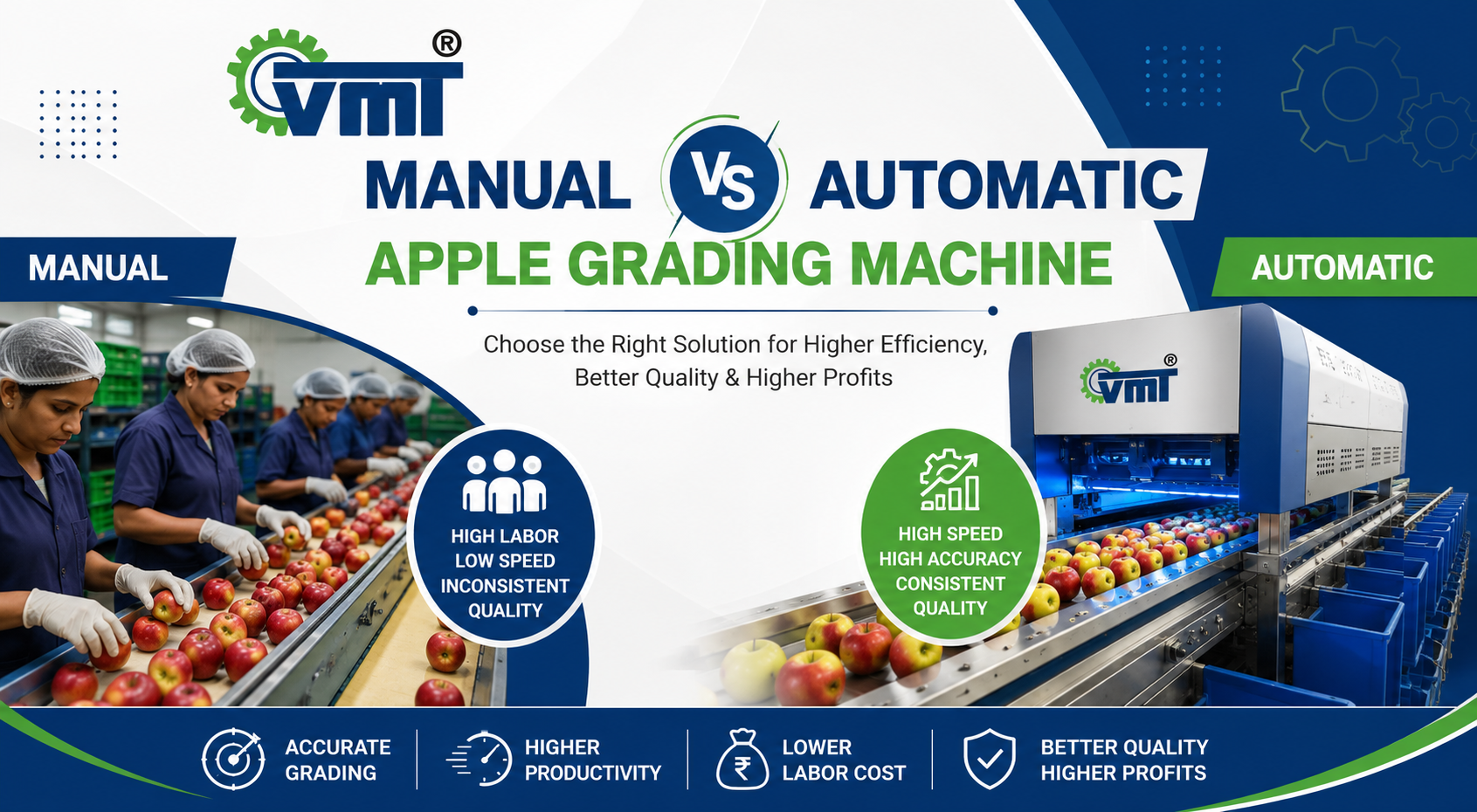
Manual apple grading involves workers inspecting apples by hand and sorting them according to size, color, weight, and visible defects. The process relies entirely on human judgment and experience.
Although manual grading requires minimal equipment, it can become time-consuming and inconsistent when processing large quantities of apples.
Advantages of Manual Apple Grading
- Low initial investment
- Suitable for small farms
- Simple operation
- No advanced technology required
- Easy to set up
Limitations of Manual Apple Grading
- Slower grading speed
- Inconsistent grading results
- Higher labor costs
- Human errors
- Worker fatigue affects accuracy
- Difficult to handle large production volumes
What is an Automatic Apple Grading Machine?
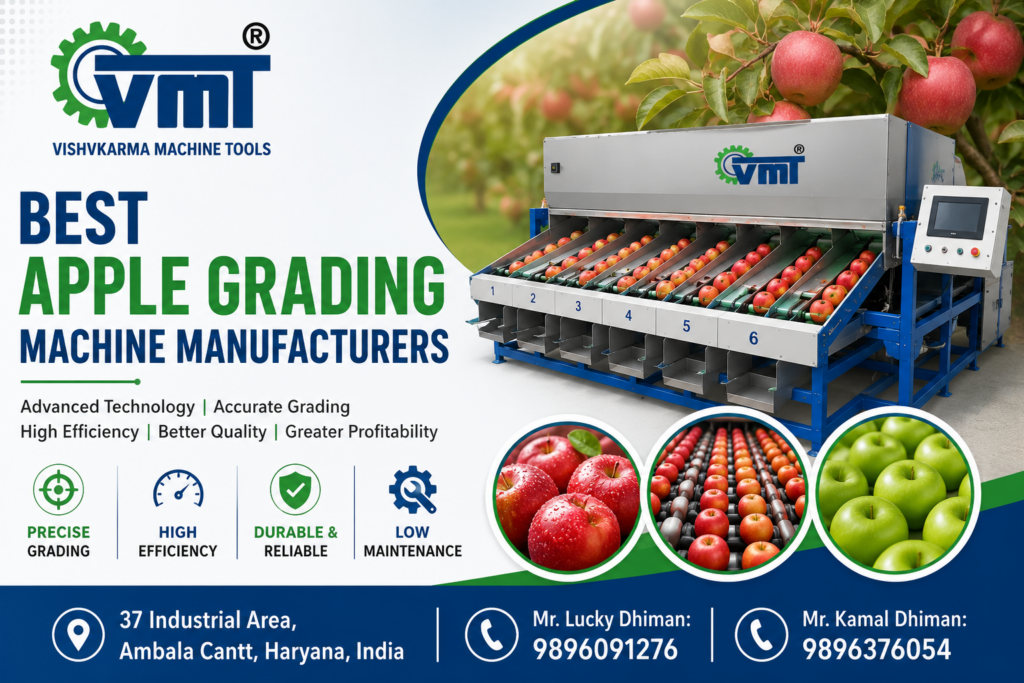
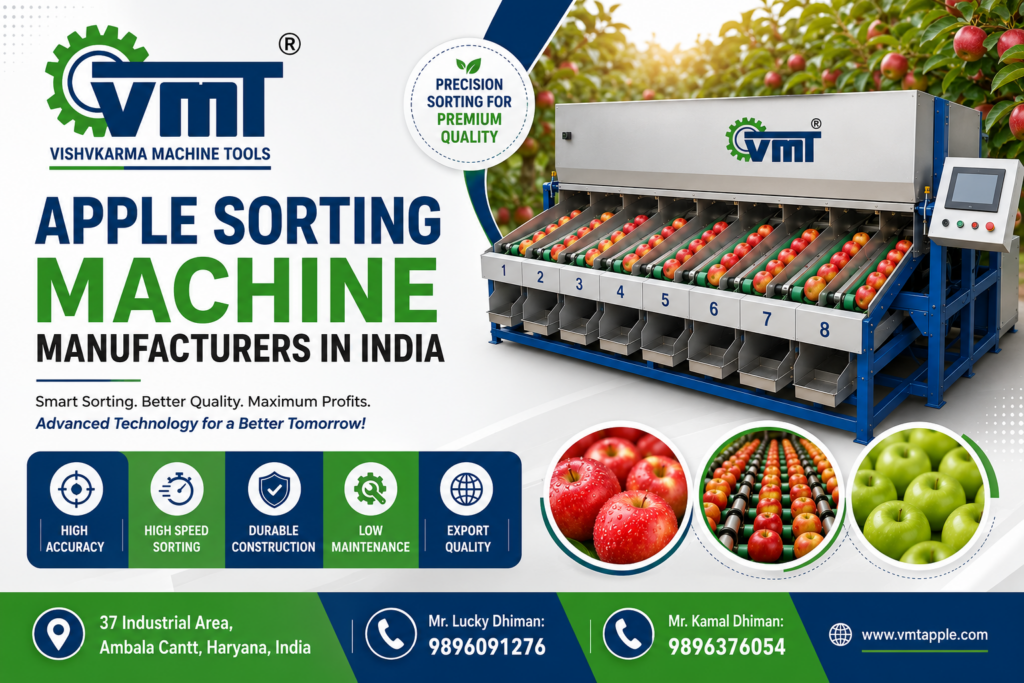
An Automatic Apple Grading Machine uses advanced sensors, cameras, load cells, and intelligent software to inspect every apple with high accuracy. It grades apples based on predefined parameters and automatically sorts them into different quality categories.
Modern automatic grading machines are designed for commercial orchards, fruit packhouses, exporters, and large-scale processing facilities.
Advantages of an Automatic Apple Grading Machine
High-Speed Operation
Automatic grading machines can process thousands of apples every hour, reducing processing time significantly.
Superior Accuracy
Each apple is graded using the same standards, ensuring consistent quality throughout the production process.
Lower Labor Costs
Automation reduces dependence on manual labor while increasing overall productivity.
Better Fruit Quality
Gentle handling systems minimize bruising and maintain the freshness of apples.
Export-Ready Grading
Automatic grading ensures apples meet strict domestic and international quality standards.
Increased Profitability
Uniform grading helps businesses secure premium market prices and improve customer satisfaction.
Manual vs Automatic Apple Grading Machine Comparison
| Feature | Manual Apple Grading | Automatic Apple Grading Machine |
|---|---|---|
| Grading Speed | Slow | Very Fast |
| Accuracy | Moderate | High |
| Consistency | Depends on workers | Uniform and Reliable |
| Labor Requirement | High | Low |
| Processing Capacity | Limited | High Volume |
| Fruit Damage | Higher Risk | Minimal |
| Operating Cost | High Over Time | Lower Long-Term Cost |
| Export Quality | Difficult to Maintain | Excellent |
| Return on Investment | Limited | High |
Which Apple Grading Machine is Best?
The answer depends on your production volume.
Manual Grading is Suitable For:
- Small apple farms
- Limited daily production
- Low-budget operations
- Seasonal fruit sorting
Automatic Apple Grading Machine is Ideal For:
- Commercial apple growers
- Fruit packhouses
- Apple exporters
- Food processing industries
- Agricultural cooperatives
- Large-scale fruit businesses
For businesses processing thousands of apples daily, an automatic grading machine offers substantial savings in labor, time, and operational costs.
Why More Businesses Are Switching to Automatic Apple Grading
The global fruit industry demands consistency, traceability, and premium quality. Manual grading struggles to meet these expectations due to variations in human judgment and increasing labor costs.
Automatic grading machines solve these challenges by providing:
- Uniform quality standards
- Faster production
- Reduced fruit wastage
- Improved customer satisfaction
- Higher operational efficiency
- Better return on investment
Features of Vishvkarma Machine Tools Automatic Apple Grading Machine
At Vishvkarma Machine Tools, we manufacture robust and high-performance grading machines designed for modern fruit processing facilities.
Our machines offer:
- High-speed grading
- Optical inspection technology
- Accurate size grading
- Color sorting capability
- Gentle fruit handling
- Heavy-duty construction
- User-friendly controls
- Low maintenance
- Energy-efficient operation
- Customizable grading settings
Our grading systems are engineered to deliver reliable performance while protecting fruit quality throughout the sorting process.
Why Choose Vishvkarma Machine Tools?
Vishvkarma Machine Tools is a trusted manufacturer of advanced fruit grading machinery in India. Our commitment to innovation, quality, and customer satisfaction makes us a preferred choice for growers, packhouses, and exporters.
Why customers choose us:
- Industry expertise
- Advanced engineering
- High-quality manufacturing
- Reliable after-sales support
- Competitive pricing
- Customized solutions
- Durable machines
- Excellent performance
Conclusion
Manual vs Automatic Apple Grading Machine : When comparing Manual vs Automatic Apple Grading Machine, the difference lies in efficiency, consistency, and long-term profitability. While manual grading may work for small-scale operations, businesses aiming for higher productivity and premium-quality output will benefit significantly from an automatic grading machine.
Investing in an Automatic Apple Grading Machine from Vishvkarma Machine Tools enables faster processing, lower labor costs, improved grading accuracy, and better market value for your apples. As the fruit industry continues to embrace automation, choosing the right grading solution can help your business stay competitive and achieve sustainable growth.